
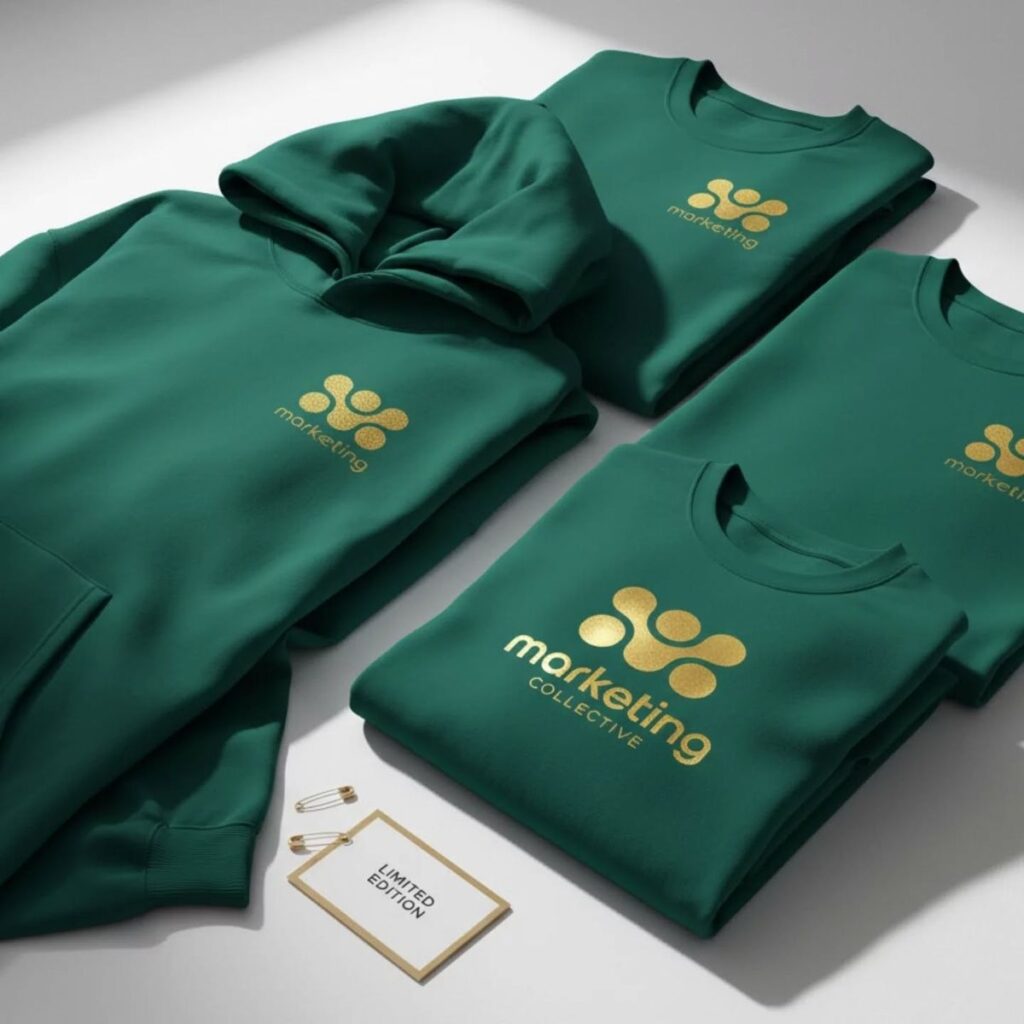
Three methods, three very different results, and most quotes do not explain the difference. Here is what each one is actually good at.
SCREEN PRINTING
A separate stencil is made for each colour and ink is pushed through it onto the shirt. It is the oldest method here and still the best for volume.
Best for: fifty shirts and up, with one to three solid colours.
Strengths: extremely durable, strong vivid colour, and the price per shirt drops sharply as quantity rises. Brilliant on dark fabric.
Weaknesses: set-up cost per colour, so small runs and photographic designs get expensive quickly. Not practical if every shirt needs a different name on it.
HEAT TRANSFER AND VINYL
The design is cut or printed onto a transfer material, then pressed onto the garment with heat. Vinyl is cut from solid coloured sheets, and printed transfers can carry full colour.
Best for: small numbers, individual names and numbers, and sports kit.
Strengths: no minimum at all, very fast turnaround, and every shirt can be different. Vinyl gives a crisp, strong finish, and it is the standard for team names and player numbers.
Weaknesses: you can feel it sitting on the fabric, and large solid areas do not breathe. If it is applied badly or washed too hot, the edges can lift over time.
DIRECT TO GARMENT, OR DTG
The design is printed straight into the fabric by a specialised inkjet printer, a bit like printing onto paper.
Best for: small runs of detailed, colourful or photographic designs.
Strengths: unlimited colours, fine detail, gradients, and a very soft finish because the ink soaks into the cotton. No set-up cost, so one shirt is viable.
Weaknesses: works best on high cotton content. On dark garments it needs a white underbase, which firms up the feel. It does not get much cheaper in bulk, so at high volumes screen printing wins on price.
WHAT ABOUT EMBROIDERY?
Worth mentioning because it often beats all three. For logos on golf shirts, caps, fleece and corporate uniforms, embroidery looks more expensive than it is and outlasts everything. It is not suited to fine detail or large designs.
QUICK COMPARISON
- 200 event shirts, two colour logo: screen printing
- 15 staff shirts: DTG or vinyl
- Soccer kit with names and numbers: heat transfer vinyl
- A detailed full colour illustration on 30 shirts: DTG
- Golf shirts for a corporate team: embroidery
- Reflective detail on workwear: specialist vinyl
THE QUESTION THAT DECIDES IT
How many, how many colours, and how hard a life will the shirt have? Answer those three and the method chooses itself.
We work with all of these, so there is no reason for us to push one over another. Tell us what you need on our branded apparel page or send us a message, and we will recommend the one that suits the job.